This is the third reduction in rates this month

The US Government Accountability Office, in a recently released report, moved ONGC Videsh Ltd, the overseas arm of state explorer Oil and Natural Gas Corporation, and three others, including Petronet LNG Ltd, out of the list.

IOC, the key importer of petrol, has sought almost 700,000 tonnes for March-September delivery.
The world's largest cash transfer programme has eliminated around 40 million ghost connections


The BJP-led government had raised excise duty nine times between November 2014 and January 2016 to shore up finances as global oil prices fell, but then cut the tax just once in October last year by Rs 2 a litre.

Modelled loosely around the National Highway System of the US, he in 2001 launched the Golden Quadrilateral and the North-South & East-West Corridor projects to build 4/6 lane highways between four top metropolitan cities of Delhi, Mumbai, Chennai and Kolkata as well as from Srinagar to Kanyakumari and Porbandar to Silchar.
India has already pipped Japan as the world's third-largest oil consumer.

Jet fuel or ATF prices were on Thursday were cut by a steep 4.5 per cent, the first reduction in rates in six months.
The Union government will gain close to Rs 1.6 lakh crore in additional revenues this fiscal from a record hike in excise duty on petrol and diesel that has pushed the total incidence of taxation on auto fuels to 70 per cent of the price. Late on Tuesday evening, the government hiked excise duty on petrol by Rs 10 per litre and that on diesel by Rs 13 a litre to mop up gains arising from international oil prices falling to a two-decade low.
Profit from its retail business jumped 77 per cent to Rs 1,923 crore and that from telecom rose by 78.3 per cent to Rs 2,665 crore.

Diesel price was on Monday hiked by 50 paise per litre, excluding VAT, with effect from midnight tonight.
Consolidated revenue rose to a record Rs 163,854 crore.

IOC along with its sister PSUs, Bharat Petroleum Corp and Hindustan Petroleum Corp had from September 16 cut jet fuel rates by as much as 3.2 per cent to Rs 37,896.83 per kl.

Petrol currently costs Rs 72.51 per litre in Delhi.
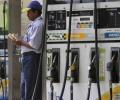
India will switch to the world's cleanest petrol and diesel from April 1 as it leapfrogs straight to Euro-VI emission compliant fuels from Euro-IV grades now -- a feat achieved in just three years and not seen in any of the large economies around the globe. India will join the select league of nations using petrol and diesel containing just 10 parts per million of sulphur as it looks to cut vehicular emissions that are said to be one of the reasons for the choking pollution in major cities.
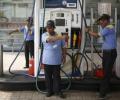
Automobile manufacturers said Euro-VI grade vehicles will not hit the roads before 2020 but the advancement gives them confidence to make investments in manufacturing such vehicles.

The divergence shows lack of financial depth in the Indian stock markets.

Oil Ministry felt it did not have a clear mandate to reduce rates post the January 2013 decision of the Cabinet to raise prices by 40-50 paisa a litre every month.
.jpg)
Three PSUs, three private firms join bid to acquire 40% stake in Haldia Petrochem.
After Indian Oil Corporation, state-run Bharat Petroleum Corporation is planning to take over petrol stations in Sri Lanka, company chairman and managing director S Behuria said on Friday.

Since August, petrol price has been cumulatively cut by Rs 9.36 per litre.

Jet fuel (ATF) prices have been hiked by a steep 6.9 per cent, taking the rates to lifetime high of Rs 75,031 per kilolitre.

Petrol price has been cut by 58 paise a litre and diesel by 25 paise with effect from midnight tonight.
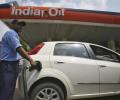
Diesel makes up nearly half of fuel demand in Asia's No 3 economy.
It will be Reliance Industries' gigantic gas find on the east coast versus the imported LNG offered by ONGC and Indian Oil Corporation in the tender for supply of gas to the 1400 MW power plant in Karnataka.

In the sixth such hike in three months, petrol price has been increased by a steep Rs 2.35 per litre and diesel by 50 paise per litre on falling rupee and firming international oil prices.
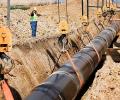
While previously selling of the marketing business, possibly to another state-owned firm, was being considered, the government is now mulling on hiving off the pipelines into a separate entity and selling off a majority stake in it.
Govt seems to bullish to meet its disinvestment target in current fiscal.
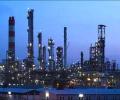
These refineries, commissioned mostly in the 1950s and 1960s during India's early industrialisation push, are inefficient and costly to maintain compared to their modern counterparts on the coast mainly operated by private companies.

Finance Minister Nirmala Sitharaman on Monday presented the Budget for 2021-22 in the Lok Sabha that is expected to provide relief to the pandemic-hit common man as well as focus more on driving economic recovery through higher spending on healthcare, infrastructure and defence amid rising tensions with neighbours, As India emerges from the COVID-19 crisis, the ninth Budget under the Modi government, including an interim one, is widely expected to focus on boosting spending on job creation and rural development, generous allocations for development schemes, putting more money in the hands of the average taxpayer and easing rules to attract foreign investments.
The FM should quietly get the oil companies to offload the shares in the market and pocket the gains

The loss, which is made good through government subsidy, has declined since March as the rupee strengthened against the dollar and global oil prices softened.

The BSE benchmark Sensex surged about 241 points to end at 35,165.48 and the NSE Nifty gained 84 points to close at 10,688.65.

Pressure on the government increased with the Reserve Bank of India's surprise move on Thursday to cut interest rates

Government-owned companies are more generous in rewarding their shareholders with dividends.
.jpg)
The Oil Ministry on October 31 issued orders asking upstream oil and gas producers like ONGC and Oil India Ltd to give Rs 16,729.74 crore (Rs 167.29 billion) to make up for 47 per cent of the Rs 35,328-crore (Rs 353.28 billion) revenue that retailers lost on selling diesel, domestic LPG and kerosene at government controlled rates in second quarter.

Investor confidence has evaporated amid fears over the rising cost of funding India's gaping current account deficit, prompting New Delhi to delay plans to raise much-needed funds through partial privatisations, finance ministry sources said.
.jpg)
The 30 Sensex companies alone, which are among the biggest companies in the country, now account for nearly 50% or about Rs 47 lakh crore of total investor wealth.

The BSE gauge Sensex fell 73.88 points to 35,548.26 and the NSE Nifty slid 17.85 points to 10,799.85, taking cues from tumbling global shares.
 © 2026 Rediff.com - Advertise with us - Disclaimer - Privacy Policy - Sitemap - Feedback - About us - Terms of use - Grievances